
Author: Hiroki Niizato

Midpoints in Astrology

The study of midpoints offers an added dimension to natal chart and transit/solar arc interpretation.  Although it is frequently called an advanced technique, its premise is quite simple to grasp, and hopefully will be of interest to this blog’s readers.
Definition of Astrological Midpoints
The base premise of midpoint interpretation is this: “A planet located equidistant from two other planets (i.e. midpoint between two planets) has a relationship to both planets.”  In practice we also include the Angles (Ascendant and Midheaven) as well as planets in midpoint interpretation.
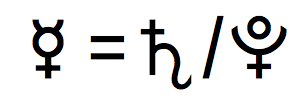
Standard Midpoint Notation: Above Picture Reads “Mercury equals Saturn Pluto”, which means Mercury makes a hard aspect to the midpoint of Saturn and Pluto.
Midpoints Notation
The midpoints method relates 3 symbols toward one another, in the context of one planet (or point) being in the middle of 2 other planets or points.  This is expressed as:
A = B/C
“B/C” denotes the midpoint of B and C.  A is the planet or point in the middle (midpoint) of B and C. 
The equal sign “=” denotes that A makes a contact by a hard aspect (conjunction, square or opposition) to the midpoint of B & C.  Hard aspect has to do with life development and change, which is why we only consider the hard aspects for the midpoint interpretation.
Regarding B/C: Slower (i.e. further from the Sun) planet influences the faster (closer to the Sun) planet. 
Regarding A (the planet aspecting the midpoint): it will affect the midpoint, or be affected by the midpoint – again, depending on the apparent speed of the planet’s movement  (see metaphor below.)
Metaphors for Interpreting Midpoints
Picture yourself as a child, and in between your parents.  Being in the middle, you were greatly affected by the quality of their interaction (e.g. were they warm or cold toward each other?  Did they argue a lot or ignore each other? Etc.) In the same way, a planet in the midpoint of two other planets that are more powerful (i.e. that have slower orbits) will be greatly affected by their interaction.
Now consider another metaphor: This time picture yourself as the adult, sitting between your two children.  Just by being in their middle, you affected the quality of their interaction (e.g. they either behaved themselves better, or became more obnoxious toward each other by trying to compete for your attention, etc.)  In the same way, a powerful planet in the midpoint of two lesser planets will strongly affect their interaction.
Example of Some Midpoints:
Mercury/Jupiter: Midpoint of Rewarding and Expansive Communication
Jupiter (being the slower planet) influences Mercury:  So this midpoint represents the experience of being rewarded (Jupiter) for one’s communication.  Any planet in hard aspect to this midpoint will carry this sense of expansive communication.  This is why MC (midheaven) = Mercury/Jupiter often denotes a professional writer.
Venus/Mars midpoint: Midpoint of Passionate Involvement
Mars influences Venus:  Romance and relationship is heated up, made passionate.  This is the midpoint of sexual and artistic passion.  Saturn placed at this midpoint (Saturn=Venus/Mars) will necessitate restraint on passion, whereas Jupiter or Uranus placed here may intensify the passion to excess.
Sun/Moon midpoint: Midpoint of Relationship Fulfillment
Sun influences Moon:  One’s Reigning Need (Moon) is fueled by Life Energy (Sun).  This is the strongest point of individual need fulfillment, and thus it has to do with relationships and self-acceptance on a deep level.  Neptune placed at this midpoint (Neptune=Sun/Moon) may suggest bewildering experiences in relationships, whereas Saturn placed here will necessitate growth and maturity in relationships.
Further Applications: Transit and Solar Arc
Even without any natal planet or point to occupy it, a particular midpoint can be activated via transit or solar arc.  For instance, a prolonged transit of Uranus to Mercury/Jupiter midpoint could excite the expansion of communication, perhaps resulting in new ideas or fresh business deals.
An outer planet transit or solar arc to the Sun/Moon midpoint often has a deep impact on our relationships and self-image.
How to Calculate Midpoints
You could simply calculate the degree difference between 2 planets or points and divide in half.
Or, you can just use this link for Calculating Midpoints Online
If you have an astrological software that calculates midpoints, you can print a “90 degree sort” table, or “Midpoint Tree” in order to get all midpoint pictures in your natal chart.
Usually an orb of 1.5~2.0 degrees is suggested to calculate midpoints.
Summary and Recommendation for Further Study
Over the last 7 years I’ve studied well-known works on midpoints interpretation by various astrologers, and use them regularly in my consultation practice.  They truly offer a fascinating additional dimension to the interpretation of natal chart and transit & Solar Arc development.
Because study of midpoints is a huge subject, it would take a lot more than this introductory post to cover adequately.  For those of you who’d like to study more, I’d recommend two works especially:
– Noel Tyl’s midpoint interpretation book is available as an appendix to his popular book “Solar Arcs”, or his 1000 page text “Synthesis & Counseling in Astrology.”
– Don McBroom’s book “Midpoints” also offers an alternative interpretation that is quite helpful to anyone who wants to use midpoints in an empowering way.
There are other well-known works on midpoints, notably by Reinhold Ebertin (Combination of Stellar Influences), but the above mentioned books are more modern and accessible compared to this 60+ year-old text.

Do you have an interesting midpoint picture that gives additional insights into your character and motivation?  Please feel free to share through emails or comments!

A Limited Time Offer:
If you have a question about a particular midpoint combination in your horoscope, please limit it to ONE midpoint per person and email or leave comment, and I’ll answer either in comments and/or as a later Q&A post.

(photo by Tambako the Jaguar)

Midpoints in Astrology

The study of midpoints offers an added dimension to natal chart and transit/solar arc interpretation.  Although it is frequently called an advanced technique, its premise is quite simple to grasp, and hopefully will be of interest to this blog’s readers.
Definition of Astrological Midpoints
The base premise of midpoint interpretation is this: “A planet located equidistant from two other planets (i.e. midpoint between two planets) has a relationship to both planets.”  In practice we also include the Angles (Ascendant and Midheaven) as well as planets in midpoint interpretation.
Standard Midpoint Notation: Above Picture Reads “Mercury equals Saturn Pluto”, which means Mercury makes a hard aspect to the midpoint of Saturn and Pluto.
Midpoints Notation
The midpoints method relates 3 symbols toward one another, in the context of one planet (or point) being in the middle of 2 other planets or points.  This is expressed as:
A = B/C
“B/C” denotes the midpoint of B and C.  A is the planet or point in the middle (midpoint) of B and C. 
The equal sign “=” denotes that A makes a contact by a hard aspect (conjunction, square or opposition) to the midpoint of B & C.  Hard aspect has to do with life development and change, which is why we only consider the hard aspects for the midpoint interpretation.
Regarding B/C: Slower (i.e. further from the Sun) planet influences the faster (closer to the Sun) planet. 
Regarding A (the planet aspecting the midpoint): it will affect the midpoint, or be affected by the midpoint – again, depending on the apparent speed of the planet’s movement  (see metaphor below.)
Metaphors for Interpreting Midpoints
Picture yourself as a child, and in between your parents.  Being in the middle, you were greatly affected by the quality of their interaction (e.g. were they warm or cold toward each other?  Did they argue a lot or ignore each other? Etc.) In the same way, a planet in the midpoint of two other planets that are more powerful (i.e. that have slower orbits) will be greatly affected by their interaction.
Now consider another metaphor: This time picture yourself as the adult, sitting between your two children.  Just by being in their middle, you affected the quality of their interaction (e.g. they either behaved themselves better, or became more obnoxious toward each other by trying to compete for your attention, etc.)  In the same way, a powerful planet in the midpoint of two lesser planets will strongly affect their interaction.
Example of Some Midpoints:
Mercury/Jupiter: Midpoint of Rewarding and Expansive Communication
Jupiter (being the slower planet) influences Mercury:  So this midpoint represents the experience of being rewarded (Jupiter) for one’s communication.  Any planet in hard aspect to this midpoint will carry this sense of expansive communication.  This is why MC (midheaven) = Mercury/Jupiter often denotes a professional writer.
Venus/Mars midpoint: Midpoint of Passionate Involvement
Mars influences Venus:  Romance and relationship is heated up, made passionate.  This is the midpoint of sexual and artistic passion.  Saturn placed at this midpoint (Saturn=Venus/Mars) will necessitate restraint on passion, whereas Jupiter or Uranus placed here may intensify the passion to excess.
Sun/Moon midpoint: Midpoint of Relationship Fulfillment
Sun influences Moon:  One’s Reigning Need (Moon) is fueled by Life Energy (Sun).  This is the strongest point of individual need fulfillment, and thus it has to do with relationships and self-acceptance on a deep level.  Neptune placed at this midpoint (Neptune=Sun/Moon) may suggest bewildering experiences in relationships, whereas Saturn placed here will necessitate growth and maturity in relationships.
Further Applications: Transit and Solar Arc
Even without any natal planet or point to occupy it, a particular midpoint can be activated via transit or solar arc.  For instance, a prolonged transit of Uranus to Mercury/Jupiter midpoint could excite the expansion of communication, perhaps resulting in new ideas or fresh business deals.
An outer planet transit or solar arc to the Sun/Moon midpoint often has a deep impact on our relationships and self-image.
How to Calculate Midpoints
You could simply calculate the degree difference between 2 planets or points and divide in half.
Or, you can just use this link for Calculating Midpoints Online
If you have an astrological software that calculates midpoints, you can print a “90 degree sort” table, or “Midpoint Tree” in order to get all midpoint pictures in your natal chart.
Usually an orb of 1.5~2.0 degrees is suggested to calculate midpoints.
Summary and Recommendation for Further Study
Over the last 7 years I’ve studied well-known works on midpoints interpretation by various astrologers, and use them regularly in my consultation practice.  They truly offer a fascinating additional dimension to the interpretation of natal chart and transit & Solar Arc development.
Because study of midpoints is a huge subject, it would take a lot more than this introductory post to cover adequately.  For those of you who’d like to study more, I’d recommend two works especially:
– Noel Tyl’s midpoint interpretation book is available as an appendix to his popular book “Solar Arcs”, or his 1000 page text “Synthesis & Counseling in Astrology.”
– Don McBroom’s book “Midpoints” also offers an alternative interpretation that is quite helpful to anyone who wants to use midpoints in an empowering way.
There are other well-known works on midpoints, notably by Reinhold Ebertin (Combination of Stellar Influences), but the above mentioned books are more modern and accessible compared to this 60+ year-old text.

Do you have an interesting midpoint picture that gives additional insights into your character and motivation?  Please feel free to share through emails or comments!

A Limited Time Offer:
If you have a question about a particular midpoint combination in your horoscope, please limit it to ONE midpoint per person and email or leave comment, and I’ll answer either in comments and/or as a later Q&A post.

(photo by Tambako the Jaguar)

Aries Stellium: Taking Action for Change

New Moon Chart for Apr 3, 2011 (house position varies by location)A Stellium is a Focal Point of Energy A stellium is when 3,4 or more planets are found in 1 sign.  Today’s New Moon highlights a whopping 6 planets in Aries, including the Sun and t…

Aries Stellium: Taking Action for Change

New Moon Chart for Apr 3, 2011 (house position varies by location)A Stellium is a Focal Point of Energy A stellium is when 3,4 or more planets are found in 1 sign.  Today’s New Moon highlights a whopping 6 planets in Aries, including the Sun and t…

Aries Stellium: Taking Action for Change

New Moon Chart for Apr 3, 2011 (house position varies by location)A Stellium is a Focal Point of Energy A stellium is when 3,4 or more planets are found in 1 sign.  Today’s New Moon highlights a whopping 6 planets in Aries, including the Sun and t…

Noel Tyl on Japan’s Crisis

Dear Holistic Astrologer Blog Readers,
I was greatly comforted and uplifted to read the following magnificent essay from Noel Tyl, addressing the recent calamity in Japan due to earthquake, tsunami and now nuclear threat.  While this essay is due to be published in Japan’s astrological communities shortly, he graciously gave me permission to share it here.  Please read, enjoy, and discuss…

Hiroki Niizato

What’s Happening Now?

Oh, the upheaval of Nature!  Inscrutable; unpredictable.

And an embarrassment for Astrology: while it can deeply appreciate the human being in society and life-development time, it can not understand or grasp the positioning of Earthquakes, Floods, giant Fires, or plagues in the scheme of human existence.  For reasons unknown, we can not harness knowledge of natural eruption and horror upon the planet.  Perhaps the reason is because Astrology is a human, phenomenological art-science evolving out of human behavior not natural cataclysm.

It is almost as if we are not yet supposed to have such  knowledge of Nature. And perhaps that teaches us something: perhaps it is not to study the calamity but the people within it.  –Of course, pre-warning of explosion can help us lessen impact on our life, but the fact remains that the explosion will take place, regardless, and it is for the people to grow through it, for populations to  be adjusted, for nations to recover in their individualistic style.  –Throughout history, it has been so.

Horoscope of Japan [Presentation of Post WWII Constitution]

We think we know the horoscope of modern Japan [The focusing of the Constitution, November 3, 1946 at 8:30 AM in Tokyo].  The national image shown in the horoscope speaks eloquently of the noble discipline of the Japanese people living within a highly focused  idealistic sense of purpose. Above all, modern Japan needs to be helpful to the world –technologically inventive and relating it all to social progress. This is Japan’s identity.

When the massive earthquake occurred, the planet Uranus was dramatically involved with a synthesis point of the Japan Sun and Moon.  This is a simple but powerful astrological glimpse of the tragedy. It suggests enormous, sudden upheaval, much like a divorce in a marriage; on a national level, we can expect chaos.

The astrological signature also brings forward the dramatic energies of individualism, the Japanese people dealing with awesome difficulty with innovation and improvements.

So easily, people can question –or even blame– their God for the horrors of loss, the wreckage of life.  Someone or something must be behind it all for some purpose!  But this question of intent or plan is equally inscrutable with reference to the causes of the calamity.  It helps us not.

Perhaps a better view is this: through this chaos, we  see dramatic intensification of our awareness of the human condition, fragile and strong at the same time.  This is what rescues us and this is what we already see active throughout the Japanese population hard at work upon recovery.

And we see how the ever-maturing national image and new energies of resurrection in Japan are attracting the loving, empathic care of the rest of the world.  –The answer to the Why? of this terrible happening is transcended by acknowledgement, collectively and individually, of the Goodness of Spirit.  This keeps us alive.  This tells us all who we are.

Bless you, Japan!

Noel Tyl

Noel Tyl on Japan’s Crisis

Dear Holistic Astrologer Blog Readers,I was greatly comforted and uplifted to read the following magnificent essay from Noel Tyl, addressing the recent calamity in Japan due to earthquake, tsunami and now nuclear threat.  While this essay is due t…

Noel Tyl on Japan’s Crisis

Dear Holistic Astrologer Blog Readers,I was greatly comforted and uplifted to read the following magnificent essay from Noel Tyl, addressing the recent calamity in Japan due to earthquake, tsunami and now nuclear threat.  While this essay is due t…

Astrology at Work: Abandonment Issues in a Horoscope

A good percentage of my clients have suffered abandonment as children (perhaps not surprising, considering my strongly placed Neptune and Pisces Ascendant.)  The effect of abandonment is insidious, but is rarely discussed in psychological or self help literature, let alone astrology books.

Childhood Scenarios of Abandonment
In her excellent book “The Journey from Abandonment to Healing”, author-therapist Susan Anderson lists several scenarios in which a child experiences the feeling of being abandoned (excerpt from page 91-92):

  • Illness of one of your parents
  • Death of a close family member, one you counted on for attention and emotional support
  • Loss of a beloved grandparent
  • Parents preoccupied with fighting, bickering, or their divorce
  • An earthquake in your family structure – your father or mother moving out
  • Older sibling leaving home – one who had been your champion, role model, or supporter
  • Workaholism in one or both parents
  • Alcoholism in the family system
  • Chaotic family – sometimes when you most needed them, one or both of your parents weren’t available
  • Moving – breaking social ties, being new kid on the block over and over
  • Parents dealing with prolonged conflict or grief; they emotionally withdrew from you
  • Depression, mental illness in the family
  • Birth of other siblings, relegating you to an emotional back burner
  • Death or illness of a sibling, which absorbed your parents’ full attention
  • Parents whose behavior is defined as self centered, narcissistic, or insensitive
Astrologically, each of these scenarios will have a correlating measurement, both natally and through transit or Solar arc.
Legacy of Abandonment Wound
The psychological effects of abandonment during childhood vary – and some children are more resilient than others (usually owing to the help of a remediating, supporting figure coming to the rescue of the child’s self concept.)  In general, repeated experience of abandonment will be internalized as beliefs that sound something like: “I’m not worthy of love/I’m unlovable/There is something wrong with me/I cause other people to reject or leave me.”
As adults we usually get over these beliefs to one extent or other, but these old feelings may resurface when we’re faced with fresh rejection or abandonment. 
Some of us repeat the pattern of abandonment in our adult relationships through choosing emotionally unavailable partners.  It’s as if we’re unconsciously hoping to cure the original wound through playing out the same scenario again and again, hoping for an alternate outcome.
Abandonment and Anxiety Toward New Life Experience
Study suggests that survivors of childhood abandonment tend to respond to new situations in life with worry and anxiety rather than excitement– thus they tend to be hesitant to try new activities or seek out new relationships. 
Possible Horoscope Signatures of Abandonment
Astrologically, the planet Neptune and the 12th house have been linked with abandonment issues.   When Neptune is in hard aspect with the natal Moon, Venus, Saturn or the Angles (Ascendant or Midheaven) or with key midpoints such as the Sun/Moon midpoint, there could be a seed of insecurity from feeling abandoned and rejected as a child.
Similarly, when the 12th house ruler is strongly placed in a natal chart, or the inner planet is located in the natal 12th house, there could be a legacy of childhood abandonment, subtly undermining the present relationships.
Working with Abandonment Issues
Abandonment wound is characterized by a sense of emotional hunger.  When feeling such hunger, you may find that your craving for instant gratification increases, in the form of food, drink, sex or any other behaviors that serve to temporary shut off the pain. 
Perhaps Neptunians’ susceptibility for escapist, addictive behaviors originate from not being able to bear the pain of abandonment they suffered.
Like any other Neptunian disorder, abandonment issues need to be healed through emotional and spiritual work (there may even be a support group for abandonment survivors in your city.)   Most of us benefit from having others that can support us in the healing process.
Many of the healing methods focus on being in the moment (another facet of Neptunian experience), and being present to our own pain in a compassionate way.  Others focus on using our power of visualization in a positive way (another Neptunian activity), through reawakening the old, broken dreams and taking positive actions to pursue them.
It takes true courage to work through the insidious effect of severe abandonment trauma, but we become more empowered by choosing to do the healing work, and learning to celebrate our individuality rather than perpetually mourning over the separation.
Did you experience abandonment as a child, and if so, how do you think it affects your attitude today toward relationships?  Does your horoscope reflect it?  Please feel free to share your thoughts through emails or comments.

(photo marcp_dmoz)

Astrology at Work: Abandonment Issues in a Horoscope

A good percentage of my clients have suffered abandonment as children (perhaps not surprising, considering my strongly placed Neptune and Pisces Ascendant.)  The effect of abandonment is insidious, but is rarely discussed in psychological or self help literature, let alone astrology books.

Childhood Scenarios of Abandonment
In her excellent book “The Journey from Abandonment to Healing”, author-therapist Susan Anderson lists several scenarios in which a child experiences the feeling of being abandoned (excerpt from page 91-92):

  • Illness of one of your parents
  • Death of a close family member, one you counted on for attention and emotional support
  • Loss of a beloved grandparent
  • Parents preoccupied with fighting, bickering, or their divorce
  • An earthquake in your family structure – your father or mother moving out
  • Older sibling leaving home – one who had been your champion, role model, or supporter
  • Workaholism in one or both parents
  • Alcoholism in the family system
  • Chaotic family – sometimes when you most needed them, one or both of your parents weren’t available
  • Moving – breaking social ties, being new kid on the block over and over
  • Parents dealing with prolonged conflict or grief; they emotionally withdrew from you
  • Depression, mental illness in the family
  • Birth of other siblings, relegating you to an emotional back burner
  • Death or illness of a sibling, which absorbed your parents’ full attention
  • Parents whose behavior is defined as self centered, narcissistic, or insensitive
Astrologically, each of these scenarios will have a correlating measurement, both natally and through transit or Solar arc.
Legacy of Abandonment Wound
The psychological effects of abandonment during childhood vary – and some children are more resilient than others (usually owing to the help of a remediating, supporting figure coming to the rescue of the child’s self concept.)  In general, repeated experience of abandonment will be internalized as beliefs that sound something like: “I’m not worthy of love/I’m unlovable/There is something wrong with me/I cause other people to reject or leave me.”
As adults we usually get over these beliefs to one extent or other, but these old feelings may resurface when we’re faced with fresh rejection or abandonment. 
Some of us repeat the pattern of abandonment in our adult relationships through choosing emotionally unavailable partners.  It’s as if we’re unconsciously hoping to cure the original wound through playing out the same scenario again and again, hoping for an alternate outcome.
Abandonment and Anxiety Toward New Life Experience
Study suggests that survivors of childhood abandonment tend to respond to new situations in life with worry and anxiety rather than excitement– thus they tend to be hesitant to try new activities or seek out new relationships. 
Possible Horoscope Signatures of Abandonment
Astrologically, the planet Neptune and the 12th house have been linked with abandonment issues.   When Neptune is in hard aspect with the natal Moon, Venus, Saturn or the Angles (Ascendant or Midheaven) or with key midpoints such as the Sun/Moon midpoint, there could be a seed of insecurity from feeling abandoned and rejected as a child.
Similarly, when the 12th house ruler is strongly placed in a natal chart, or the inner planet is located in the natal 12th house, there could be a legacy of childhood abandonment, subtly undermining the present relationships.
Working with Abandonment Issues
Abandonment wound is characterized by a sense of emotional hunger.  When feeling such hunger, you may find that your craving for instant gratification increases, in the form of food, drink, sex or any other behaviors that serve to temporary shut off the pain. 
Perhaps Neptunians’ susceptibility for escapist, addictive behaviors originate from not being able to bear the pain of abandonment they suffered.
Like any other Neptunian disorder, abandonment issues need to be healed through emotional and spiritual work (there may even be a support group for abandonment survivors in your city.)   Most of us benefit from having others that can support us in the healing process.
Many of the healing methods focus on being in the moment (another facet of Neptunian experience), and being present to our own pain in a compassionate way.  Others focus on using our power of visualization in a positive way (another Neptunian activity), through reawakening the old, broken dreams and taking positive actions to pursue them.
It takes true courage to work through the insidious effect of severe abandonment trauma, but we become more empowered by choosing to do the healing work, and learning to celebrate our individuality rather than perpetually mourning over the separation.
Did you experience abandonment as a child, and if so, how do you think it affects your attitude today toward relationships?  Does your horoscope reflect it?  Please feel free to share your thoughts through emails or comments.

(photo marcp_dmoz)